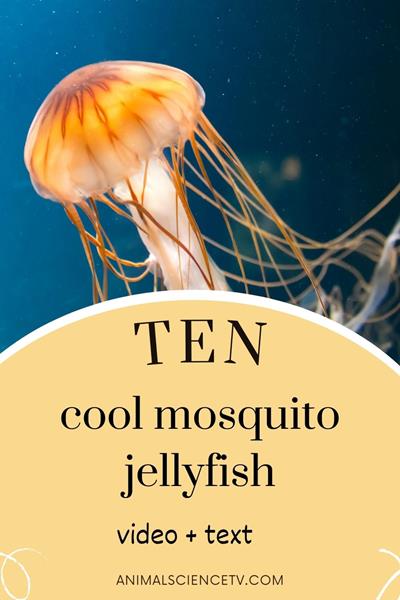
Jellyfish are often feared due to their harsh defense mechanism. However, what many people don’t know is that they also have interesting skills and features that are worth knowing.
Here are the 10 cool facts about Jellyfish in video form. Keep scrolling to see the text version of this list.
10 COOL FACTS ABOUT JELLYFISH
Jellyfish, with their ethereal forms and graceful movements, are more than just mesmerizing ocean dwellers. These ancient marine creatures, which have roamed our oceans for over 500 million years, play a pivotal role in aquatic ecosystems.
Jellyfish, ranging from tiny to enormous, are found in oceans worldwide.
ALSO READ/WATCH: 10 cool facts about water striders
10. The Neural Net
Jellyfish have no brains, but they have something called a “Neural Net.” This system has the motor neurons spread throughout the entire body. Maybe you could say an entire Jellyfish is the brain. Jellyfish are still animals capable of reacting to environmental stimuli and they can see light, sense touch, as well as smell.
9. A Living Fossil
The first Jellyfish evolved over 700 million years ago in the Cambrian Period. This makes them 3 times older than the dinosaurs.
8. The Immortal Jellyfish
There is one species of jellyfish that is literally capable of living forever. Turritopsis Tornhi can transform its adult cells back into stem cells and have them develop into new cell types and form into a blob when it is injured or starving.
Then the blob clones itself asexually into a colony which is the beginning stage of its life. It can even turn muscle cells into neurons. A good analogy is a buttery fly turning itself back into a caterpillar.
7. Glowing in the dark
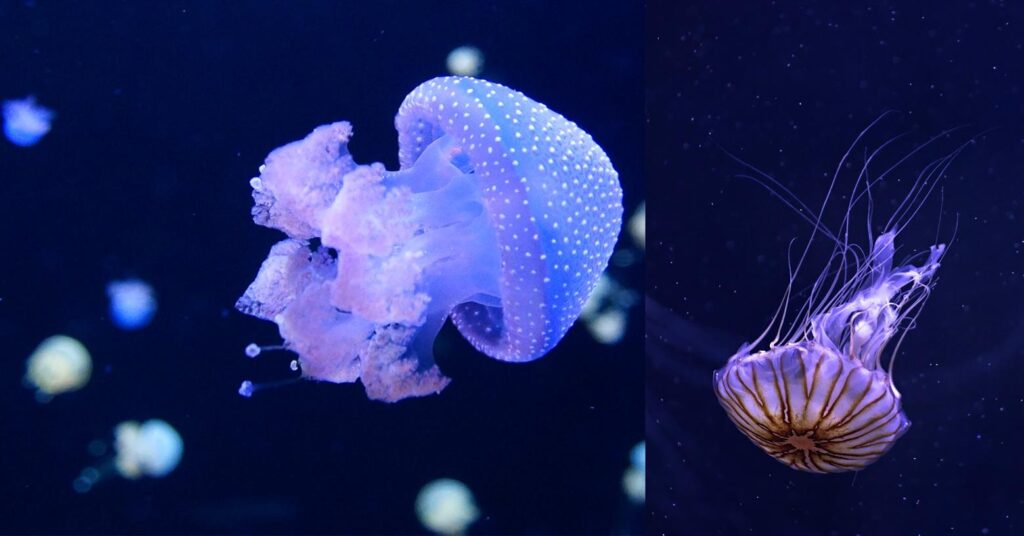
Some jellyfish have fluorescent proteins and can make flashes of light called bioluminescence. This is used to attract prey and to warn or startle predators. Some jellyfish can spray particles to mimic plankton to confuse predators.
6. Nuclear Meltdown Threat
Most nuclear power plants are placed near large bodies of water. The water cools the reactor and is needed to stop a meltdown. In 2005 a reactor in California was shut down due to Jellyfish clogging the input pipes. In 2013 Sweden had to shut down a reactor as well. Jellyfish blooms could one day cause a Nuclear Disaster.
5. 150 Million stings per year
There are an estimated 150 million Jellyfish stings per year. The jellyfish is an animal to actually be worried about when you are in the water. There were only 66 shark attacks in 2018. Ocean temperature increases are causing the jellyfish population to increase.
4. The Box Jellyfish
The box jellyfish is only about the size of a coin, but its sting can kill a human within 2 minutes. Each tentacle has about 5,000 stinging cells that can give you a heart attack, brain haemorrhaging, and swell your throat so much that you will suffocate.
You’ll need some good luck if you have to swim while dealing with that. The sea turtle is the only animal known to be immune to the box jellyfish sting because of its thick skin.
3. What to do if stung?
If you are stung by the jellyfish, step #1 is to get out of the water so you don’t drown. Some people suggest pouring vinegar or some type of acid on the wound to neutralize the venom and taking an antihistamine to stop the swelling, which could cause you to suffocate.
2. Jellyfish can sting when dead
Jellyfish can still sting when they are dead. Try not to step on or pick one up you might see on the beach.
1. 10,000 meters depth
Jellyfish mostly live near the surface where most food is available, but they have been seen in the Marianas trench at up to 10,000 meters deep. That is farther down than Mount Everest is up.
FINAL THOUGHTS
Jellyfish, often perceived as mere oceanic drifters, play a crucial role in marine ecosystems. They are both predators and prey, maintaining a delicate balance. By feeding on smaller plankton, they regulate these populations, preventing overgrowth that can harm coral reefs and fish habitats.
Jellyfish also provide sustenance for marine species, including sea turtles and larger fish. Their presence indicates healthy oceans, acting as bioindicators for scientists studying environmental changes.
Therefore, jellyfish are integral to marine food webs and vital for monitoring our oceans’ health. They might look scary, but not all are.
I hope that this collection of 10 cool facts about jellyfish has been helpful and educational.
Head to my Youtube playlist where you can choose between animal facts, animal education , and animal news.
ARE YOU ON PINTEREST? SAVE THIS FOR LATER READ: